
The word “art” is used to describe a diverse range of human activities and has different definitions attached to it. One can define it as anything done by a man with creative perception while another can refer to it as an expression of thoughts, emotions, intuitions, and desires. Art has its own power in the world and plays a role in governance. Imagine a world without any form of art, without any writings, drawings, carvings, sculptures, music, or dance, that world would be a very dull place. Art exists as a means through which ideas can be expressed and communicated. It brings out a person’s view and credits one with the freedom to act and express themselves. It is quite difficult to quantify and characterize what art really is and how it functions, but it possesses a satire power that changes the world one perception at a time.
In 1503, the Mona Lisa, a painting by Leonardo Davinci raised the subject of the woman’s role within art and changed art as it had previously been. The Berlin Wall is popular for its graffiti was used as a place for people to express their opinions and was marked with powerful paintings that changed the world. In Africa, a famous artist from Nigeria Ben Enwonwu made the portrait of Tutu which became a Nigerian national icon that was considered as a symbol of reconciliation between the government and the Biafran separatists after the civil war in Nigeria. All these are strong examples of cases where art played a role in changing people’s perceptions.
Governance often used as a synonym for government refers to a process whereby elements in society wield power, authority, and influence and enact policies and decisions concerning public life and social upliftment. Art can play a role in governance in the following ways.
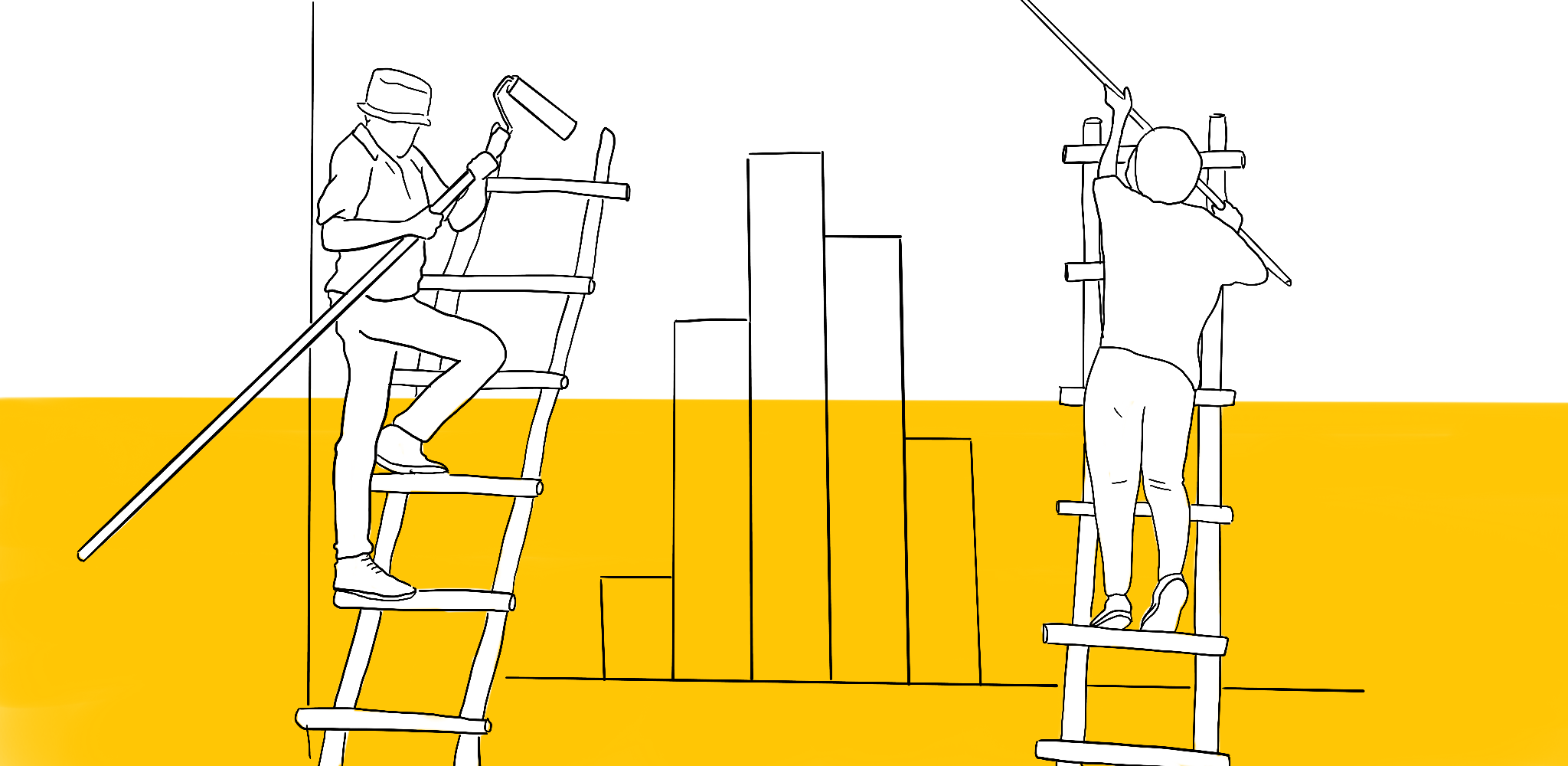
Art can be used as an educative tool to educate the masses without discriminating between one’s level of literacy. Socially Engaged Art in the form of paintings on walls can bring communities together towards a common goal, can raise awareness, and involve people and communities in constructive debates, collaboration or social interaction. This form of art involves artists spending much time integrating into the specific community which you wish to help, educate or share with and learning from it before they can create data murals for the community. An artist’s aim is always to help this community work towards a common goal, raise awareness and encourage conversation around issues, or perhaps to improve their physical or psychological conditions.
Art is not limited by boundaries and allows artists to innovate and explore with an open mind. Artists aren’t limited to drawing what is occurring but can as well create ideas of what something could look like. Artists can imagine other perspectives that can influence society by creating hope and triggering a change in society. This influences society by changing opinions, instilling values, and translating experiences across space and time.
In a world dominated by high literacy levels among both males and females, written language dominates the expression of ideas and emotions. However, if art is used for communication, it is more adaptable to real emotions and is a critical way of expressing an opinion without having to lay out a rational argument. It also allows communication among people from different backgrounds and different cultures rousing emotions in those who encounter it to effect change.
#CreateYourKampala, one of our newest projects, combines data and art to empower citizens to seek better public services in their communities. For example, data murals that educate people on better sanitation and better hygiene practices are being used in communities dissatisfied with their sanitation services.
Murals from #CreateYourKampala


Artists often base their work on their environments which promotes truthfulness in society. Art can act as a repository for preserving memories in a truthful manner. Artistic historical records show how it felt to exist in a particular place during a specific moment in time. Like a popular quote states “Art shakes a tree and then all the monkeys fall out”, artists possess the ability to ensure that truth is upheld and where it isn’t, they make it their business to scrutinize the institutions that govern our lives.
The #CreateYourKampala project engaged citizens in impacting change within their communities. Participatory design workshops were held which brought people together to share collaborative ideas that were turned into one large data murals. The #CreateYourKampala process had many steps for engagement with our target communities and local governments. We first met with and had conversations with local leaders in each of our target communities. We then held focus group discussions in each community to explain the project and understand the context of our community members. Next, our enumerators, together with the guidance of community members, collected information from a larger sample size. We then met with the community members once again for a participatory workshop to collaborate on the themes for art pieces, together with the artists assigned for each area.
The participatory workshops focused on 1) identifying issues that were most important to the communities (in all three areas, this was sanitation and hygiene) 2) co-designing pieces of the permanent art installations together with the artists by pulling out key themes within these issues. We did so by organizing individual sketching sessions whereby each participant contributed a piece of art to multiple collaborations, and whereby all participants contribute art to one larger collaborative piece. The artists then worked together with these concepts, and the quantitative data to produce the final pieces.
In conclusion, art can have a transformative effect on people everywhere in the world. The photograph of the little girl running and fleeing a bomb was a defining moment of the Vietnam war. This image won the Pulitzer Prize in 1973 and is considered to have impacted on America’s involvement in the war. Elsewhere, photos of people suffering during the great depression in America are also believed to have led to the end of the movement. In both these scenarios, art is shown to have impacted people’s attitudes to bring about change within an individual. Art doesn’t possess the power to change minds at a macro level, it instead changes minds at a micro-level. Change starts in the heart and mind through transforming emotions. One cannot bring to the world what they have not internally absorbed, digested, and assimilated. This is why art can play a key role in governance.
To learn more about #CreateYourKLA, visit our website: createyourkampala.pollicy.org. Interact with the data and art to see how we’re using data and art to impact governance and accountability in Kampala.

By Arthur Kakande, Communications Lead at Pollicy

Leave A Comment